

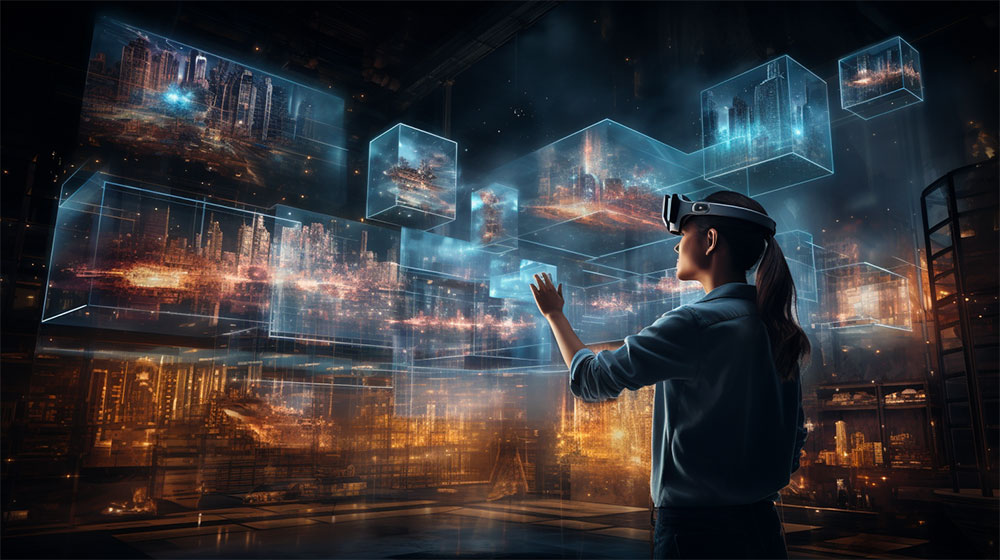
Technology is entering a new era where digital experiences don’t just live on screens — they blend seamlessly into the real world. This revolution is powered by Spatial Computing, one of the most exciting innovations of 2025. It combines AR (Augmented Reality), VR (Virtual Reality), AI, and 3D mapping to create immersive, interactive environments.
From Apple Vision Pro to advanced AR glasses, spatial computing is reshaping how we work, shop, learn, and experience digital content.
What Is Spatial Computing?
Spatial computing refers to the technology that lets computers understand and interact with the physical world using:
- 3D sensors
- Cameras
- AI vision
- Augmented reality
- Virtual reality
- Motion tracking
It allows digital objects to exist and behave naturally within real spaces.
Simple Example
If you place a virtual sofa in your living room using AR — and it looks real, casts shadows, and reacts to lighting — that’s spatial computing.
Why Spatial Computing Is Important (2025)
Spatial computing is transforming everyday digital interactions into immersive experiences.
1. Realistic AR & VR Experiences
Devices like Vision Pro make digital screens float in your room, giving you a workspace that feels natural and limitless.
2. Hands-Free Interactions
Gestures, eye tracking, and voice commands replace keyboards and mouse controls.
3. Hyper-Personalized Shopping
Try products virtually:
- Clothes
- Furniture
- Makeup
- Shoes
All in your real environment.
4. Smarter Work & Collaboration
Teams can hold 3D meetings, interact with digital objects, and visualize designs together.
5. New Level of Learning
Students can explore:
- The human body
- Solar systems
- Engines
- Historical events
In fully interactive 3D.
How Spatial Computing Works (Simple Explanation)
Spatial computing relies on three major components:
1. Mapping the Environment
Sensors scan and build a 3D map of your surroundings.
2. Understanding Objects
AI analyzes furniture, walls, lighting, distance, and movements.
3. Blending Digital Content
Digital objects are placed in real space with realistic lighting, depth, and scale.
Applications of Spatial Computing (2025)
Gaming
Immersive AR and VR games where digital characters move around your home.
Healthcare
Doctors practice surgeries using 3D visual simulations.
Education
Students learn through lifelike 3D visualizations.
Retail
Customers preview products at home before buying.
Architecture & Construction
Designers visualize building models in full 3D scale.
Remote Work
Virtual monitors, 3D meeting rooms, and shared virtual workspaces.
Tourism
Virtual tours of historical places and landmarks.
Leading Companies Working on Spatial Computing
- Apple (Vision Pro)
- Meta (Quest devices)
- Microsoft (HoloLens)
- Google (AR glasses research)
- NVIDIA (3D graphics & AI models)
Why Spatial Computing Is the Future
✔ Blends real and digital worlds
✔ Makes work more interactive
✔ Enhances creativity
✔ Reduces the need for physical screens
✔ Enables powerful virtual collaboration
By 2030, spatial computing will evolve into everyday tools — from AR glasses replacing smartphones to fully immersive digital workspaces.
Challenges Ahead
- High hardware cost
- Battery limitations
- Need for better 3D apps
- Motion sickness issues in VR
- Privacy concerns with constant scanning
But rapid innovation is solving these issues quickly.
Conclusion
Spatial computing is more than a tech trend — it’s the next evolution of digital interaction. As devices become lighter, smarter, and more affordable, this technology will redefine the way we work, shop, learn, and experience the world.
The future of computing won’t be limited to screens.
It will surround us.